Altoids Tin Mixer
Fun, easy project from Instructables. I had it hooked up in my car but some jerk stole it - need to make another one.
Bill of Goods
- Altoids Tins
- 3.5MM Mini Stereo Panel Mount Jack Connector
- Resistors - between 1k and 10k ohms
Schematic
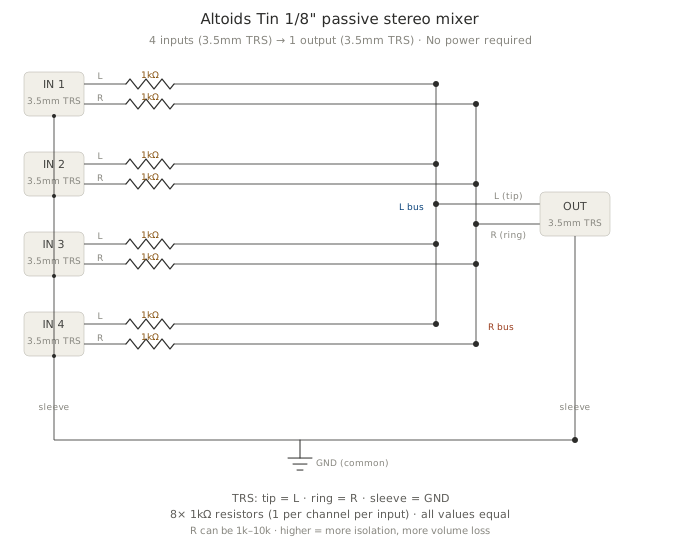
Signal Math
Load seen by each input device
Where:
- = mixing resistor value (1kΩ recommended)
- = number of other inputs ()
- = input impedance of the amp/aux input
- = parallel resistance:
Example
Where: 4 inputs, 1kΩ resistors, 10kΩ aux input
Info
Comfortably above the ~1kΩ floor for low distortion.
Volume loss
| Inputs | Loss |
|---|---|
| 2 | −6 dB |
| 3 | −9.5 dB |
| 4 | −12 dB |
Resistor value tradeoffs
Info
Sweet spot for consumer line-level: 1kΩ – 4.7kΩ